Plastic surgeons work in a highly competitive industry, and many clinics start their marketing plans with a small budget and big hopes. They set aside money for promotions, but they often underestimate how much strategy matters. As a result, they run ads that fail to attract genuine patient interest. Their budget disappears fast, and they still struggle to convert potential patients. If this sounds familiar, you are not alone. This guide on PPC advertising for plastic surgeons will help you avoid wasting your budget. Keep reading because the details ahead can help you make better decisions and drive real results.
Build a Strong PPC Foundation Before Spending a $1
Every successful campaign starts with a clean foundation. Many plastic surgeons rush into PPC advertising without a plan. They open Google Ads, boost a few posts, or run generic search ads. They guess instead of using real data. This burns through ad-spend faster than expected. You need a clear PPC strategy built around your target audience, search behavior, and business goals.
Start by reviewing your plastic surgery practice. Identify your top services. Breast augmentation, rhinoplasty, facelifts, and liposuction attract different types of search intent. You need to address each service with the right ad groups, targeted keywords, and landing pages. This structure helps you maintain a cleaner campaign and a higher ad quality score.
Use Keyword Research to Avoid Wasted Ad Spend
Keyword research sets the tone for every PPC effort. Many cosmetic surgery practices choose broad keywords. These keywords attract clicks from people who are not ready for procedures. That is why you must focus on high-intent, long-tail, and high-converting keywords.
Tools like Google Keyword Planner help you understand what potential patients search for. You can also refine your list with negative keywords. When you add irrelevant keywords to the negative list, you block bad traffic. You keep your marketing budget safe and avoid throwing money down the drain. Focus on keywords that show genuine interest. This helps you reach the most relevant audience and increases the click-through rate.

Create Compelling Ad Copy That Speaks to Real Patients
Your ad copy is your first impression. You cannot afford dull or vague messages. Your PPC ads must speak directly to people searching for your services. Highlight your expertise, explain what sets your clinic apart, and use language that builds confidence.
Mention real value. Many patients want to see before-and-after photos, meet qualified surgeons, or claim a free consultation. These details grab attention. They also help searchers trust your practice. Clear and powerful ad copy increases ad rank and improves campaign performance. When writing ads, keep your message aligned with the user’s search intent. Your plastic surgery ad campaigns should connect to the targeted keywords. This builds a strong relationship between your ad copy, landing pages, and keyword groups. It boosts your quality score and reduces cost per click.
Build Conversion-Focused Landing Pages That Actually Work
Sending people to your homepage is a recipe for wasted traffic. You need conversion-focused landing pages for each procedure. These pages must speak directly to the searcher’s needs.
Here is what works for plastic surgery landing pages:
- Clear service descriptions
- Before and after galleries
- Short lead forms
- A strong call to action
- Mobile-friendly layouts
When you optimize landing pages, your conversion rate climbs. This means your ad spend works harder. You turn more clicks into real patient consultations. The best-performing plastic surgery websites always combine stunning visuals with strong messaging and easy site navigation. This is where many surgeons drop the ball. They run great ads but send users to weak landing pages. The result is low conversions and wasted ad budget.
Understand the Role of PPC Platforms
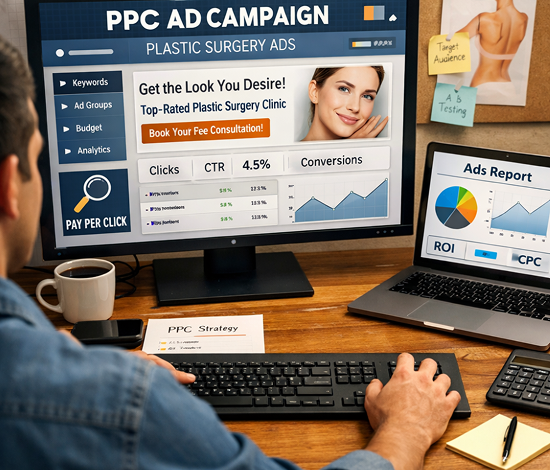
Many clinics rely only on Google Ads. While Google Ads remains the leading platform for PPC for plastic surgeons, you can also use Bing Ads to reach a different audience. Both platforms offer strong ad placement options and allow you to reach people across the entire funnel.
Google Ads also provides Google Ads offers, expanded text ads, ad extensions, video ads, and multiple placement choices. You can display your ads on search engine results pages, YouTube, and partner networks. Your goal is to reach the right audience, not everyone on the internet. Paid ads give plastic surgeons a chance to cut through the noise. You can appear above organic traffic and secure top search results. But you must choose placements that align with your budget and campaign goals.
Improve Your Bidding Strategy for Better Control
Your bidding approach determines how fast your money disappears. Many plastic surgeons use automated bidding without understanding the logic behind it. You need a bidding system that aligns with your goals.
If your focus is lead generation, choose bidding strategies built around conversions. If you want more traffic, choose clicks. If your goal is visibility, choose impression-based bidding. Your bidding strategy should match your stage of growth. Keep a close eye on competition levels. Cosmetic surgery keywords can get expensive. You need a smart, balanced approach that keeps you competitive without overspending. Stick to the targeted keywords that bring genuine patient interest.

Use Negative Keywords to Protect Your Budget
Negative keywords act like a shield. They protect your marketing budget from low-value searches. Many practices ignore this step and end up paying for traffic that never converts.
Add terms like “free,” “cheap,” “DIY,” or unrelated treatments to your negative list. This ensures your PPC advertising attracts people seeking professional medical procedures. You avoid wasted ad spend and stay focused on people who are ready to book consultations.
Track Every Click With the Right Tools
Many surgeons run ads without tracking what happens after people click. This creates blind spots. You need strong analytics to see what performs well and what needs attention.
Use tools like:
- Google Analytics
- Conversion tracking
- Call tracking
- Lead form tracking
These tools reveal how users behave after clicking your ad. You can see which keywords bring conversions, which generate leads for plastic surgery practice, and which landing pages need work. You gain clarity and prevent more wasted spending.
Optimize Your Campaigns Regularly
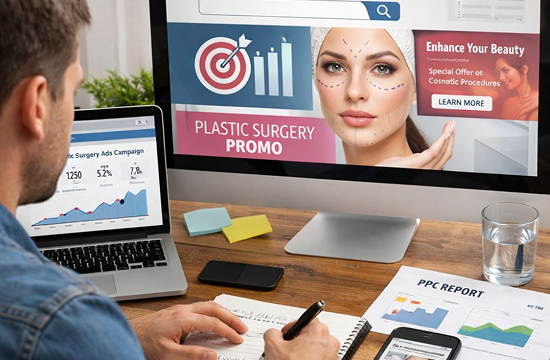
PPC is not a “set it and forget it” system. You must monitor and adjust your campaigns often. Review your keyword lists, adjust bids, update ad copy, and test new landing pages. This process helps you avoid dips in performance.
Review your plastic surgery PPC campaigns, identify patterns, and remove weak keywords. Update your ad copy to match new trends in the plastic surgery industry. Improve your audience targeting to reach patients who are ready to take action. Test different offers, layouts, and headlines. These steps turn average campaigns into consistent performers.
Reach the Right Audience With Better Ad Placement
Your ad placement determines who sees your ads. Use targeted ads that focus on your ideal patient. You want people who show a strong interest in plastic surgery, not those just browsing. Use location, device, and time-of-day targeting to reach people most likely to convert.
Many patients browse on mobile devices, so make sure your ads and landing pages have a mobile-friendly web design. Strong formatting builds trust and reduces bounce rates. Use insights from your ad platforms to refine your placements. Explore search partners, display networks, and video networks only if they help your results. Focus on the channels that deliver genuine patient interest.
Make PPC Work for Your Plastic Surgery Business
PPC marketing gives you a powerful way to grow your plastic surgery business. You reach the right audience, improve your visibility, and bring in people who want real procedures. But without a strategy, your budget vanishes quickly. Use strong keyword research, compelling ad copy, smart bidding, and clean landing pages. Protect your spend with negative keywords. Track your results and optimize often. These steps help you build PPC success and support long-term growth. When you take control of your campaigns, you avoid mistakes that drain your marketing budget.
PPC Advertising for Your Plastic Surgery Practice
Plastic Surgery Dr. Marketing serves your clinic in the best way possible: with laser-focused marketing techniques. Your surgery business should portray a trustworthy image for the clients, so they can easily call for an appointment. Our copywriting, web design, and SEO services put your plastic surgery site at a competitive advantage. Contact us to start your project today!